

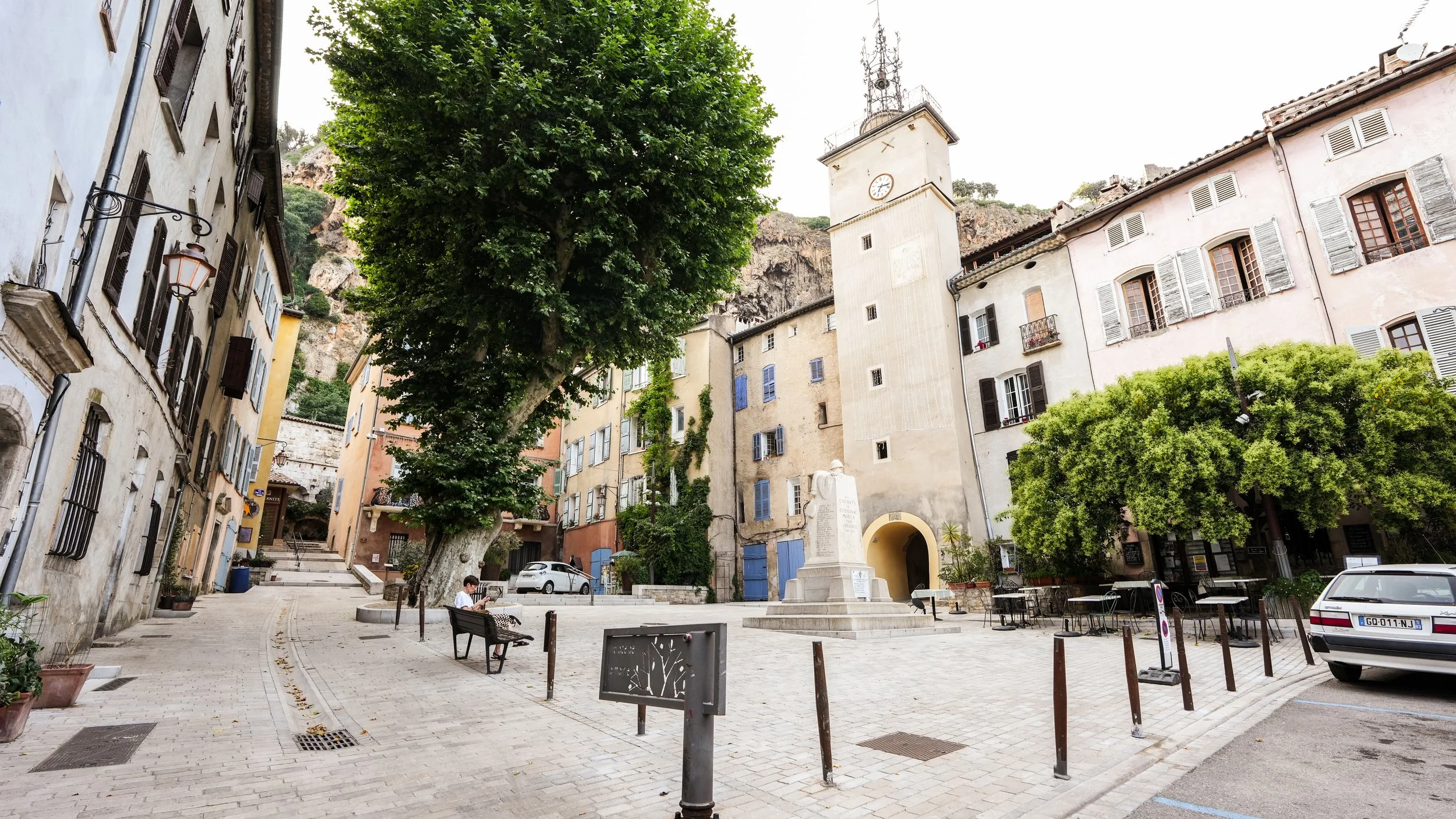
HISTORIC PLACES & HIGHLIGHTS IN COTIGNAC
Cotignac isn’t just picturesque — it’s rich with historic sites that tell the story of centuries of Provençal life, faith, and tradition. From cliffside troglodyte dwellings and medieval churches to sacred sanctuaries and monastic life, these attractions are must-see highlights for anyone exploring the village.
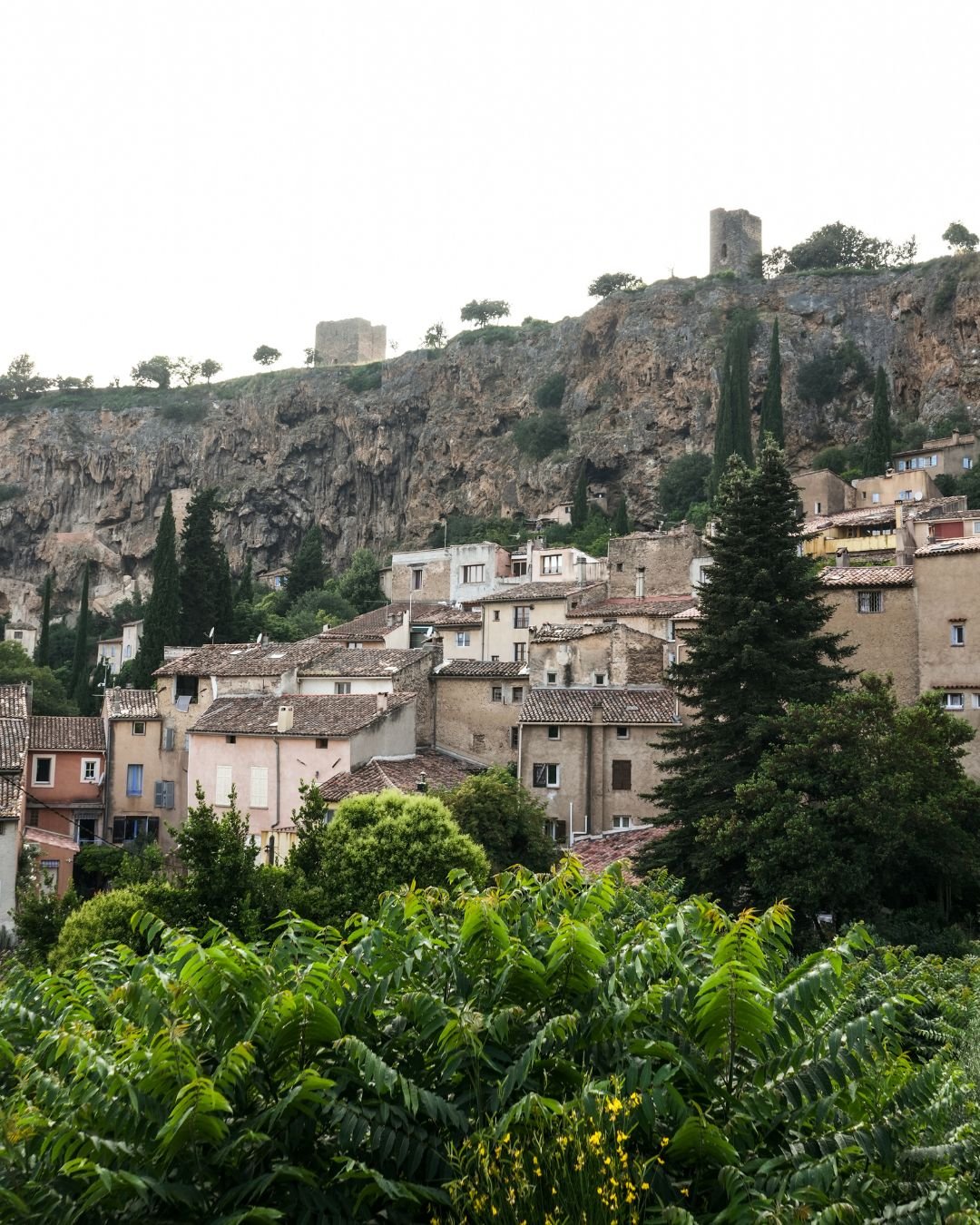
CLIFFSIDE ROCK & TROGLODYTE CAVES
One of Cotignac’s most striking features is its rock face rising about 80 m above the village, carved over millennia by erosion. This dramatic cliff not only defines the landscape but also houses ancient troglodyte caves and dwellings that were used as refuges during medieval times.
WHAT TO SEE: Walk the footpaths and trails up the cliff for panoramic views of the village and valley. You’ll pass through tunnels and grottoes — remnants of how inhabitants used the rock for shelter and defence.
BEST TIME TO VISIT: Morning or late afternoon — the light on the cliff is especially beautiful then.
TIP: Wear sturdy shoes for the uneven paths and consider a short hike to the highest viewpoints for photos.
SANCTUARY OF NOTRE-DAME DE GRACES
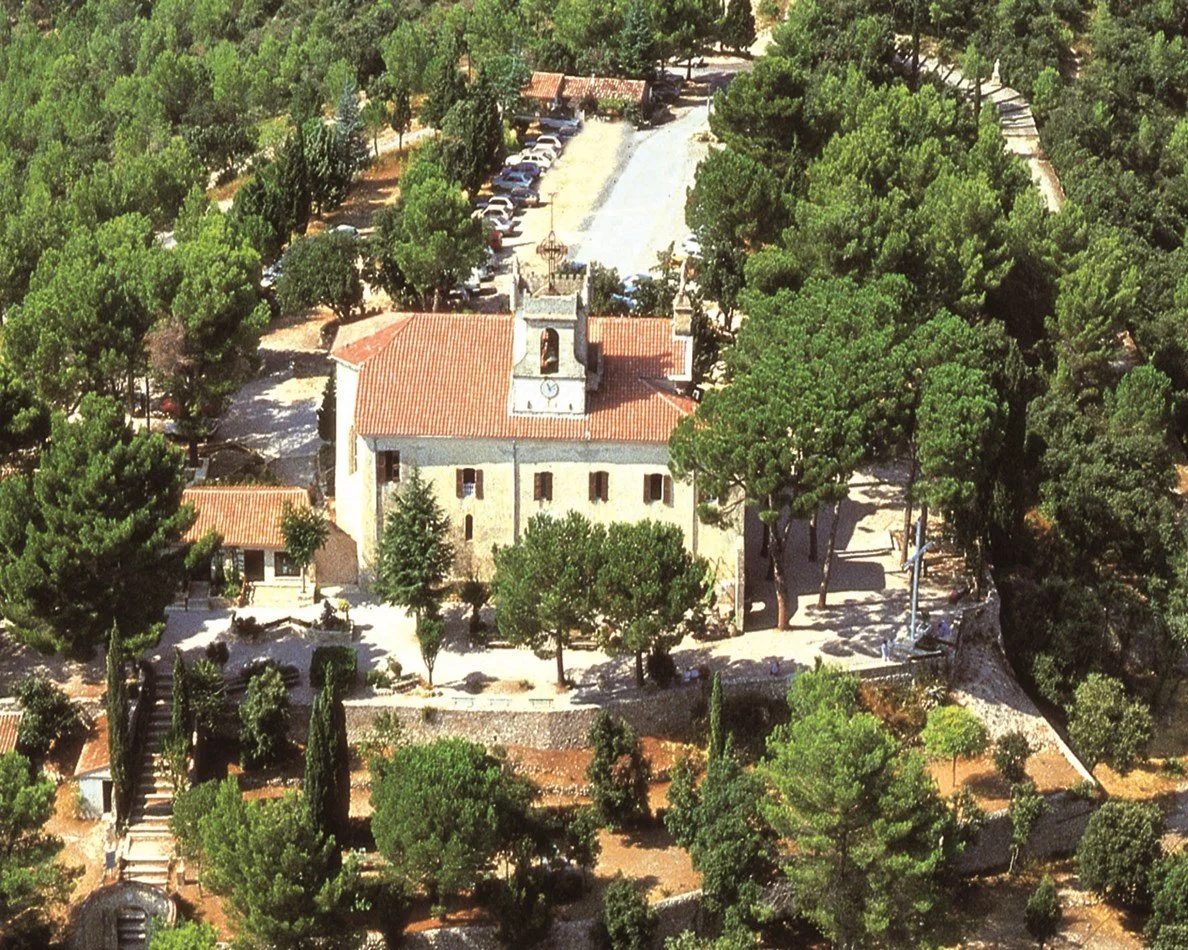
This historic Marian sanctuary is one of Cotignac’s most important spiritual and architectural treasures. According to tradition, the Virgin Mary appeared here in 1519, prompting construction of the chapel and later expansions.
WHY IT’S SIGNIFICANT: Pilgrims have visited for centuries, and even King Louis XIV and his mother, Anne of Austria, came here in 1660 to give thanks — a moment still commemorated by a marble ex-voto inside.
OPENING HOURS: Open daily (general visiting hours are roughly 7 am–7 pm, extended up to 8 pm in summer).
WHAT TO EXPECT: Peaceful gardens, historic interior, ongoing masses or devotional events, and a small shop with religious items and books.
VISITOR TIPS: A quiet, reflective place — perfect for contemplative visits or to escape the midday sun.
MONASTERY OF ST. JOSEPH FONT BESSILLON
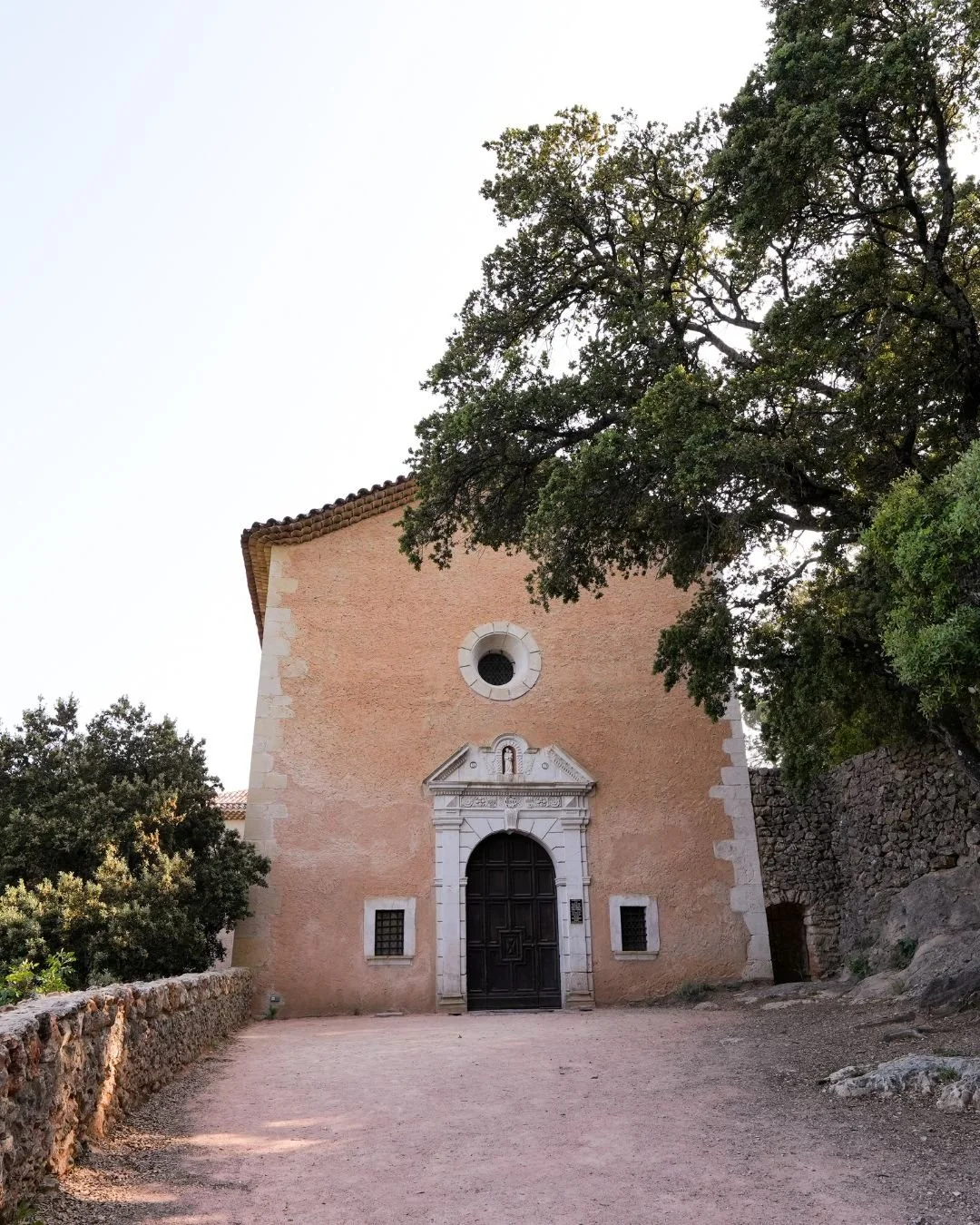
This historic monastery and chapel mark the site of the apparition of Saint Joseph in 1660, when a local shepherd reportedly discovered a natural spring after being instructed by a mysterious figure.
WHAT YOU’LL FIND: A 17th-century chapel built over the spring, adjoining monastic buildings restored by Benedictine sisters in the 20th century, and quiet meditation spaces set in woodland.
OPENING: The monastery welcomes visitors, though parts may be cloistered. Hours for chapel access are generally in the morning and early afternoon — check locally when you arrive.
WHY VISIT: It’s a serene site combining legend, history, and beautiful Provençal nature — ideal for visitors looking to explore beyond the village centre.
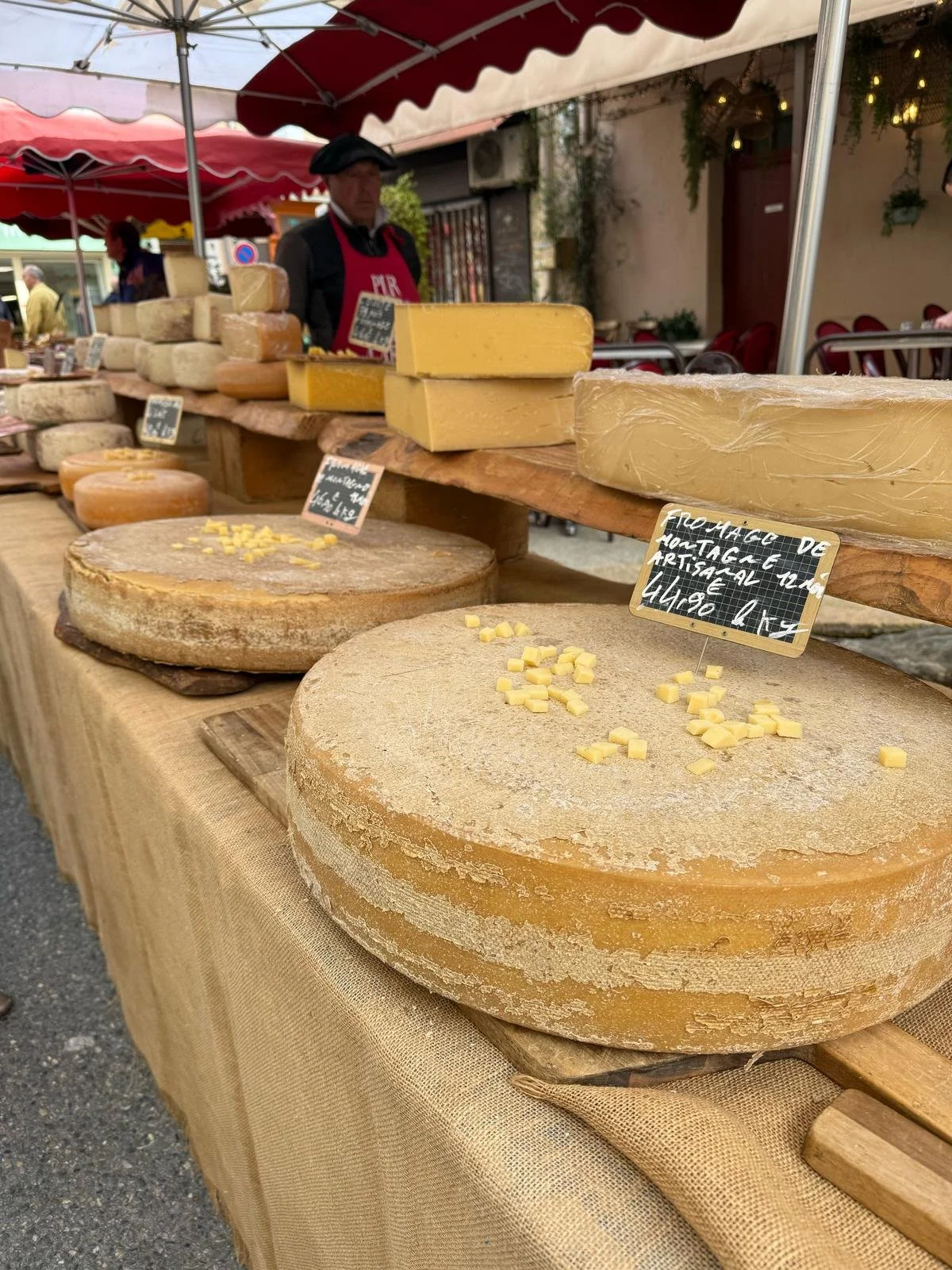
WEEKLY COTIGNAC MARKET
One of the most beloved local rhythms in Cotignac is its weekly market, held every Tuesday morning (approx. 8:00 – 13:00) on Cours Gambetta and the Place de la Mairie.
This colourful Provençal market is a feast for the senses:
FRESH SEASONAL PRODUCE: Ripe tomatoes, figs, melons, artichokes and other fruits and veg picked that morning.
LOCAL CHEESES & CHARCUTERIE: Creamy goat and sheep’s cheeses, saucissons, and other regional specialities.
HONEY, OLIVE OIL & AROMATIC HERBS: Provence’s signature flavours ready to take home.
CRAFTS & ARTISAN PRODUCTS: Pottery, textiles, soaps, lavender items, and unique souvenirs.
💡 The market isn’t just about shopping—it’s a social event, where locals and visitors mingle, sample treats, and enjoy the lively Provençal atmosphere. Arriving early gives you the best selection and plenty of time to follow up with a long lunch in one of the cafés overlooking the square.
GOOD TO KNOW BEFORE YOU ARRIVE
Cotignac is a walkable village, but many streets are cobbled and sloped. Comfortable shoes are recommended.
Most historic sites are outdoors or active religious buildings; opening hours can vary by season.
Spring and early autumn are ideal — cooler weather and easier walking around cliff sites.
Summer days can be hot — plan sightseeing for mornings or evenings and enjoy shaded terraces at midday.
A car is useful for visiting nearby sanctuaries and countryside sites, but village attractions are easily reached on foot.
Shops and bakeries may close for lunch and on Sundays — this is normal village life in Provence.
The local tourist office offers a guided walking tour through village history (takes ~1–1.5 hours).